
Union County Crime News Sources
Where does Union County crime news come from? Four main streams feed it: sheriff and police announcements, Charlotte television stations, the Monroe newspaper, and court or jail records. WBTV keeps a Union County page with selected arrests. WSOC handles regional stories, including incidents near Waxhaw and cases that stretch across county lines. The Enquirer-Journal focuses on Monroe and its neighbors, while the Charlotte Observer picks the bigger regional crimes. Even the sheriff's own news archive, though official, publishes only some incidents.
Each source answers a different question. An agency release explains why deputies made an arrest. A reporter's story may add neighbors, witnesses, or court filings. The P2C roster answers who is in custody right now, and the Daily Bulletin lists bookings by date. A story's photo choice, whether an agency image, a file picture, or nothing, never replaces checking the court docket for the outcome.
Union Outlets at a Glance
Papers and stations publish on their own schedule. A story appearing in a local section proves nothing about completeness. Some arrests never make print. Secondary indexes, the kind named below, work as unofficial copies at best. Verify anything they show against UCSO and eCourts before treating it as fact.
| Outlet or channel | Coverage | Photo approach | Where to start |
|---|---|---|---|
| Union County Sheriff's Office | Official releases and public-safety announcements. | May describe an agency image or charge; selective. | UCSO news archive |
| WBTV | Union County stories and newsworthy arrests. | Agency-provided, file, or no image. | Union County news |
| WSOC-TV | Regional crime stories, including Waxhaw and county cases. | Story-specific photo, video, or none. | Local news |
| The Enquirer-Journal | Monroe and Union County local reporting. | Agency, detention, court, file, or no photo. | Local newspaper |
| Charlotte Observer | Selected regional crime coverage. | Agency or news image, sometimes none. | Crime section |
| Secondary Union indexes | BustedNewspaper, RecentlyBooked, Mugshots.com, Arrests.org, Mugshots.zone, and Muglist local pages. | May copy or retain an image. | Unofficial sources only; verify with official records. |
Naming those secondary sites just describes the local scene. It is not a stamp of approval. Entries there can be stale, duplicated, or missing entirely. For anything that matters, go straight to the sheriff's roster, a records request, or the court docket first.
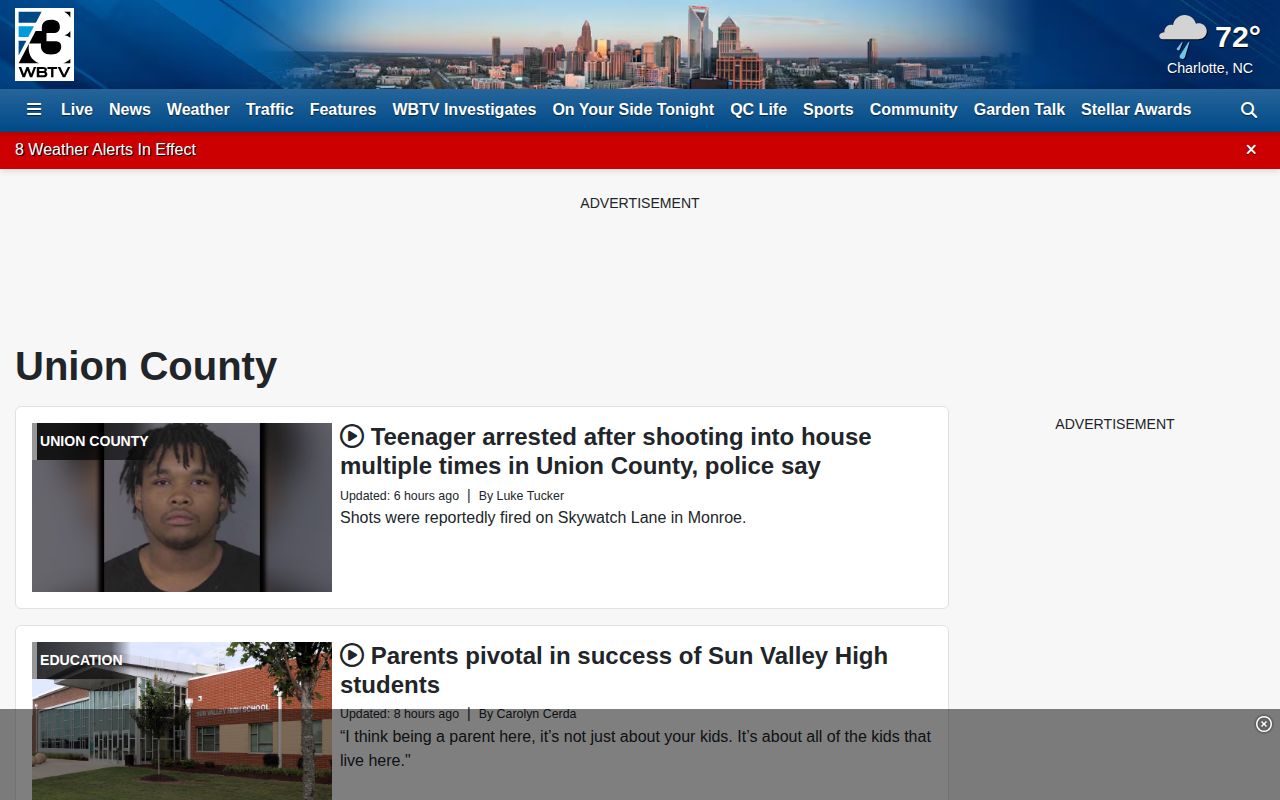
WBTV's official Union County section offers a clear example of how regional television picks and packages local public-safety stories for its readers.
Remember what a news section is not. It is no substitute for a live jail roster. Custody status, booking details, and case outcomes all live in the official county and court systems.
How a News Photo Gets Published
How does a photo end up beside a Union County story? Reporters pull from sheriff or municipal releases, agency statements, custody data, court files, and public-record requests. The image itself may come straight from an agency, sit in an old file, or simply not exist for that piece. Two state laws shape this. G.S. 15A-502 authorizes certain law-enforcement photographs, while G.S. 132-1.4 treats criminal-investigation records, photos included, as a separate category from ordinary public records. Neither law forces an outlet to run a booking image or guarantees a requester a copy.
That explains a lot. A story can name a charge yet show no photo, and an image on some unofficial index may lag behind the official record. Spot an error? Contact the agency or court that created the record first. An expunction or sealing order changes the official court view, though each publisher may need its own correction request. Note: no paid removal service is needed or endorsed here.
From Story to Union Court Record
Treat any story as a lead. It is never a final record. Before linking a name to a case, match the full name, the agency, the date, and the stated charge. Then split the question in two. The county-wide search answers custody. The court system answers the result.
- Note the story date, person's name, agency, city, and charge wording.
- Check UCSO Inmate Inquiry to see whether a current-custody-oriented row matches.
- Use the Daily Bulletin with `(AR) Arrest` and the relevant date. Its warning says some events may not be reported the same day.
- If the roster has changed, try Arrest/Incident Search or request an existing record through the county public-record process.
- Search the eCourts Portal and read the Register of Actions and disposition. Use the Clerk for a certified result.
A booking charge is only the first line of the story. Later, the Union County court record may show a dismissal, a reduction, a not-guilty finding, a deferred result, or a conviction. Follow the disposition.
City coverage works differently by town. Indian Trail contracts with the sheriff, so UCSO is the practical booking source. In Monroe, the police department may hold the incident report while the county jail view stays with UCSO. Waxhaw lists a police contact but no standalone booking feed. The Union County search hub gathers the roster, bulletin, court, DOC, and records-request tools in one place.
Why Union Stories Are Selective
No single feed catches every Union arrest. WBTV, WSOC, the Enquirer-Journal, and the Observer each pick stories by news value, available reporting, agency statements, and audience interest. The sheriff's archive is more direct. Even so, it chooses what to post. A quiet news day means nothing. Bookings happen anyway. And a splashy headline rarely means the bulletin holds just one case.
Treat the city name as a clue, not proof. Monroe, Indian Trail, and Waxhaw all show up in county stories, but the arresting agency and booking destination can differ. A Waxhaw story might quote police while the booking row sits with UCSO. A later court entry may carry a different charge label altogether.
Note: A published story can explain an arrest, but only the originating agency and Union County court record can settle the record's current status.
Official Releases Versus Copies
A sheriff's press release beats a copied index for accuracy, but it still shows only what the agency chose to share. One release might announce charges from a finished investigation. Another reports a busted suspect by name and skips everyone else booked that week. Agency wording can shift later too, once a case moves into court. So note the date, the office, and the charge as written, then pull the underlying record before drawing conclusions.
Copies have their own role. Secondary Union County pages pull from sheriff or clerk material and flatten it into name-and-charge lists, which makes old mentions easier to find once someone has left the roster. The tradeoff: duplicates happen, photos go stale, and the first charge may not reflect a later reduction. A copied page never outranks UCSO or eCourts, and it can't tell you who is in custody right now.
When a record looks wrong, move in order. Save the story and the official source dates first. Then ask the agency that created the record about factual errors, use the court process for sealing or expungement where eligible, and route supporting documents through an independent publisher's free correction channel if that applies. Story, booking entry, and disposition are separate links in one chain.
One more habit worth building: match names across sources with care. A bulletin may give an event description plus a case number. The roster shows a primary charge and arrest date. eCourts adds the formal case label and hearing entries. Same person, three framings. Line up the agency and the date before you call them one record.
City stories reward this the most. An Indian Trail arrest usually lands in the county system through a contract. A Monroe incident can start with Monroe Police and continue at the county jail. In Waxhaw, the news may cover police action while the public booking path runs through UCSO. Follow the record, not the headline's city name.
Monroe, Indian Trail, and Waxhaw
A city name in a headline tells you little about who holds the booking record. Indian Trail contracts jail services to the Union County Sheriff's Office, so its arrest search starts with UCSO rather than a town roster of its own. Monroe Police runs a separate incident and records route through Police Records. County bookings still show up in the county detention view. Waxhaw lists a department contact, but no standalone arrest or booking feed appears on its public site. Its eCrash tool covers crash reports only, not mugshots or jail custody.
These splits explain why a news story and a search result can disagree. The arresting agency, the jail that processed the person, and the court that files the charge may each use different labels for the same event. Pull the police-side report from the city's official page. Get custody information from UCSO. Take the court outcome from eCourts. Regional outlets add context, but none offers a complete city booking index.